


Mexican forces have arrested a man they say is a key figure in the country's most powerful drugs cartel.
Noel Salgueiro Nevarez is accused of running the Sinaloa cartel's operations in the northern state of Chihuahua, where drug violence is rampant. Defence officials said his arrest would seriously weaken the cartel in Mexico and abroad. The arrest was made on the same day as that of Martin Rosales Magana, who is accused of leading the La Familia gang. The army said Mr Salgueiro Nevarez was seized in a carefully planned military operation, without a shot being fired. Defence Ministry spokesman Ricardo Trevilla Trejo said Noel Salgueiro Nevarez was behind much of the extreme violence which has plagued Ciudad Juarez, Mexico's murder capital. He said the suspect, also known as El Flaco (The Skinny One), led a gang of hitmen who extorted local businessmen, kidnapped for ransom, and tortured and killed members of a rival gang, the Juarez cartel. 'Criminal career' The security forces say the bitter war between the two gangs was the trigger for most of the 3,000 killings in Ciudad Juarez last year. Prosecutors said Mr Salgueiro Nevarez started his criminal career 15 years ago, producing marijuana for the Sinaloa cartel. They said his gang had been exporting up to 15 tonnes of marijuana and two tonnes of cocaine per month to the United States. The government had offered a three-million-peso ($220,000; £130,000) reward for information leading to his capture. Security officials said his arrest, in the city of Culiacan in northwestern Sinaloa state, was a major blow to the Sinaloa cartel and its leader, Joaquin "Shorty" Guzman. Mr Guzman, 54, is Mexico's most wanted man and thought to be one of the country's richest. Two years ago, he made Forbes magazine's list of the 67 World's Most Powerful People. At number 41, he was just below Iran's Supreme Leader Ayatollah Ali Khamenei. Crumbling cartel Mr Salgueiro Nevarez's arrest was announced at the same time as that of another top figure in the Mexican drugs trade. Martin Rosales Magana, 47, was seized in Mexico state on Tuesday. Police say he is one of the founders of the once-powerful La Familia cartel. Until the beginning of this year, La Familia ran much of the methamphetamine trade in Mexico. It claimed to protect local communities and promote family values, but also engaged in gruesome violence. The security forces say it has been almost entirely dismantled, with its top leaders either in jail or dead. They say Mr Rosales Magana lead a number of small cells still loyal to the cartel, which had holed themselves up in a rural area between Michoacan and Mexico state. At a news conference, federal police counter-narcotics chief Ramon Pequeno described how La Familia splintered after the security forces killed the cartel's then-leader Nazario Moreno in December 2010. He said part of the gang set up a rival cartel, which they named Knights Templar, and which quickly took over many of the methamphetamine labs in the west and south-west of the country. Mr Pequeno said Mr Rosales Magana and those loyal to him tried to regain control of the drugs trade in Michoacan state by forging an alliance with their long-time rivals, the Zetas cartel. He told reporters how "they met with the Zetas to ask for operational assistance, weapons and salaries [for gunmen] and expenses money, in order to recoup important cities held by the Knights Templar". However, according to police, the alliance soon faltered because Mr Rosales Magane no longer had access to the precursor chemicals needed to make methamphetamine, their main source of income. Mr Pequeno said with La Familia severely weakened, police would now focus their attention on taking down the Knights Templar.


 Sir Richard Dearlove, who was head of MI6 when British agents helped to send Muammar Gaddafi's opponents back to Libya, where they were tortured, said on Thursday that intelligence co-operation with countries with poor human rights records had always been cleared by ministers. "It has always been pretty clear that our governments in the UK have accepted that danger and difficulty and have given political clearance for that sort of co-operation," he told a meeting of the Henry Jackson Society, a foreign policy international thinktank. Whitehall officials have already insisted that intelligence cooperation with Gaddafi's Libya was authorised by ministers. However, Labour ministers at the time, including Tony Blair and Jack Straw, have distanced themselves from MI6's co-operation with Gaddafi's security services, as has Lady Eliza Manningham-Buller, then head of MI5. Dearlove said that MI6's co-operation with Gaddafi's regime against extremism was "uncomfortable" and "pragmatic". But he denied MI6 enjoyed a "cosy" relationship with the regime. He said that MI6 had had "phenomenal" success in disarming Libya, which had succeeded in acquiring the infrastructure needed to begin a nuclear weapons programme from the rogue Pakistani scientist, AQ Khan. "I resent the suggestion the relationship with Gaddafi was cosy," he said. "It was not a cosy relationship, it was a pragmatic one." Dearlove added: "It was a political decision, having very significantly disarmed Libya, for the government to co-operate with Libya on Islamist terrorism. The whole relationship was one of serious calculation about where the overall balance of our national interests stood." Papers found abandoned in the Tripoli offices of Moussa Koussa, Gaddafi's former foreign minister and intelligence chief, showed how MI6 was involved in sending suspected extremists back to Libya. They included Abdul Hakim Belhaj, a former prominent member of the Libyan Islamic Fighting Group, which had links with al-Qaida, and who is now military commander in the Libyan capital. Referring to the forthcoming Gibson inquiry into allegations that British security and intelligence agencies colluded in the torture and abuse of terror suspects, Dearlove said that he should not say more about co-operation with countries which did not share the UK's views about human rights. Dearlove said he was surprised by the relative failure of violent Islamism to make a more lasting political impact. North Africa and the Middle East showed al-Qaida had failed to achieve the long-term political impact many people had predicted at the time of the 9/11 attacks in 2001. He said the terrorist network appeared to be "on the back foot" and was struggling to mount operations in the developed world. "I think it faces an issue of credibility. It badly needs to demonstrate to its sympathisers and its core membership that it can pull off something really big," he said. He said he believed al-Qaida had made a "serious tactical error" in taking on the Americans in Iraq when they would have been better off trying to mount more 9/11-style attacks. "I think it was a vision of taking on the US military. Once the US military got its act together, it came out of that confrontation very badly," he said. He insisted the west had been right to respond in the way it did to the events of 9/11, even though it resulted in the radicalisation of many Muslims. "Confronting al-Qaida was a confrontation of beliefs and values. I think it was the right thing to do, despite the risks, to come out on the front foot to meet that threat militantly," he said.
 These are the amazing scanner images of the abdomen of a young Irishman caught smuggling cocaine at an airport in Brazil. The man, identified only as P.B.B., was stopped as he tried to board a flight from Sao Paolo to Lisbon in Portugal and then connecting to Brussels in Belgium. He was carrying 72 bags containing almost a kilo of cocaine inside his intestines. The 20-year-old man, who was caught last Monday at Congonhas Airport, was taken to the Santa Misericordia Hospital where the capsules, containing 830g of cocaine, were removed from his body. Police said it was his nervous behaviour that tipped off the authorities. The drugs would be worth approximately €150,000, police sources said. He has now been charged with international drug trafficking which carries a sentence of up to 15 years. Last week a Colombian woman, who flew from Argentina, died in a New Zealand hospital after a bag of cocaine burst in her body. Sorlinda Vega (37) arrived from Buenos Aires carrying 26 packages weighing 1oz each. More than 70,000 people a day are estimated to pass through San Paolo international airport and approximately five a day are arrested for drug smuggling. The airport, which has connections to 53 countries, is known as the main exit point for drug mules bringing cocaine from South America to the rest of the world. Drug mules are paid anything from €1,000 to €6,000 per trip. The largest contingent of those arrested are from South Africa, where poverty makes the lure of easy money even more attractive, but San Paolo’s jails contain smugglers from all over the world. Brazil’s penal system is notoriously slow and it can take up to six months after arrest for the first court hearing or 12 months for a sentence to be passed. Prisoners are allowed parole after two-thirds of their sentences have been served, but have to stay in the country which can be particularly difficult for foreigners with no jobs or family support
 The two are accused of stabbing a fellow Briton five times in a drug related argument.Photo EFE Two British men, 30 year old S.D., and 22 year old D.R.S., were arrested by the Guardia Civil in Sant Antoni, Ibiza, on Tuesday afternoon on charges of attempted murder. They are accused of stabbing a 19 year old Briton on Monday afternoon when arguing about a drug-related matter. Initial reports said that the victim was Irish, but he has now been named as Jack McCarthy from Liverpool. One of the five stab wounds punctured the victim’s lung, and a third saw a cut to his cheek. The British Foreign and Commonwealth Office confirmed that it was aware of a British citizen in hospital in Ibiza, and said that they were providing consular assistance. On Tuesday morning the youngster wanted to discharge himself, but the doctors advised the duty Guardia and they have kept him under treatment. A search of the homes of the two arrested men found 30 grams of cocaine and other substances, and an amount of money in cash, allegedly from the sale of drugs.
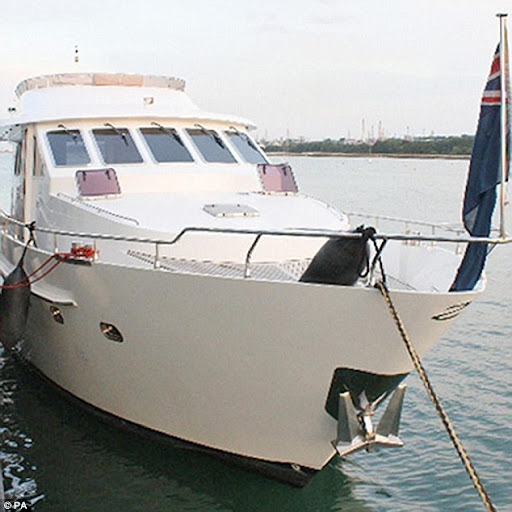 A record £300 million haul of cocaine has been seized and six alleged members of an international drugs gang arrested, officials said today.


